Description: In this activity, students will learn about non-Newtonian fluids and viscosity.
Materials:
- Cornstarch
- Water
- Cup
- Spoon
Directions
Pour about one cup of cornstarch into the mixing bowl, and dip your hands into it.
Pour the water in, mixing slowly as you go. Keep adding more water until the mixture becomes thick (and hardens when you tap on it). Add more cornstarch if it gets too runny, and more water if it becomes too thick.
Drop your hands quickly into the Oobleck - take note of what happens slowly lower your hands into it. Notice the difference!
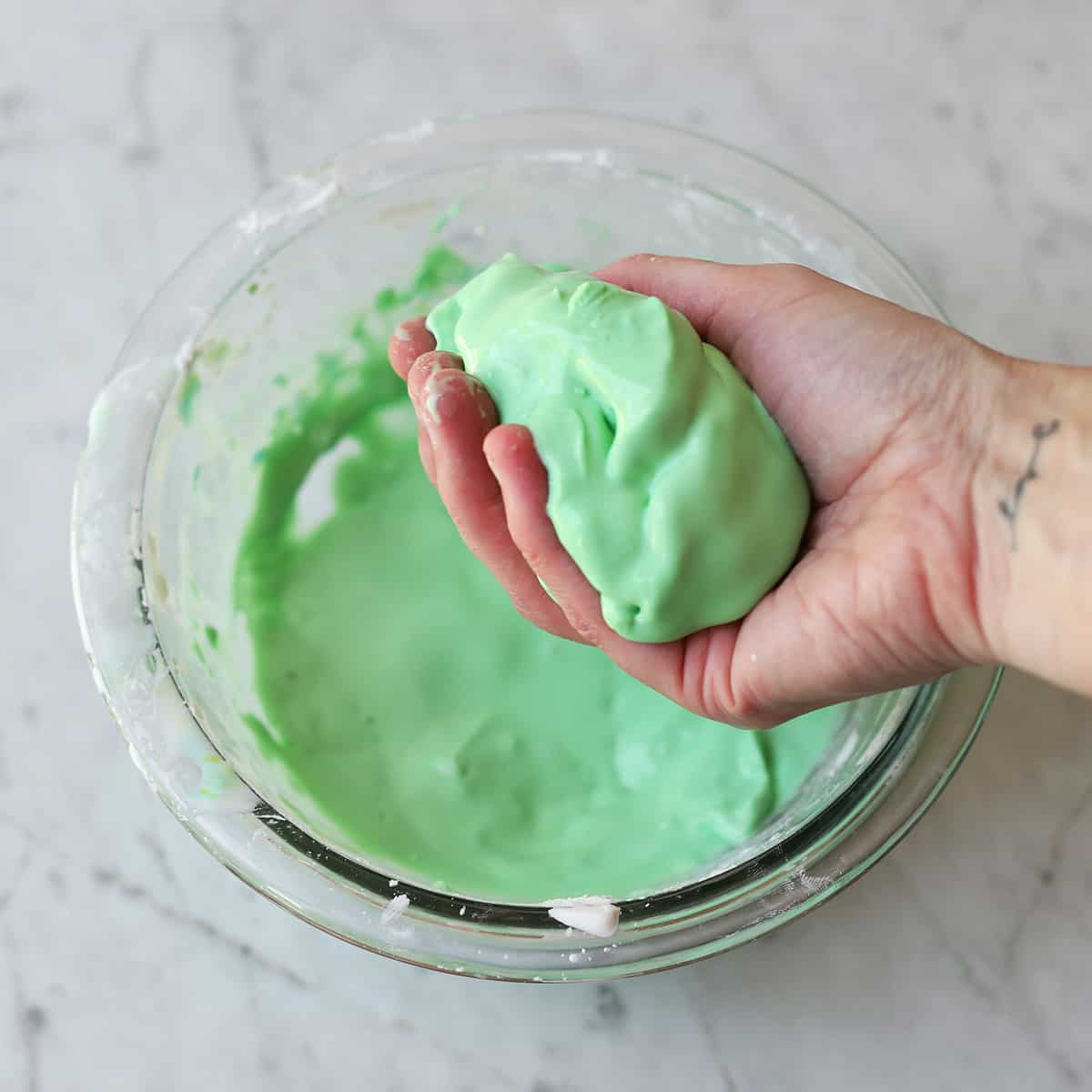
Hold a handful in your open palm—what happens?
Try squeezing it in your fist or rolling it between your hands—how does it behave differently?
Move your fingers through the mixture slowly, then try moving them faster.
Explanation:
Oobleck can mimic the qualities of a solid or liquid. These materials are called Non-newtonian fluids. While a Newtonian fluid has a constant viscosity (example: water has a constant viscosity), the viscosity of Non-newtonian fluids changes. You can think of viscosity as fluidity, or how thick a fluid is. For example, syrup has a high viscosity while water has a lower viscosity.
Can you think of more examples of high viscosity fluids? What about low viscosity fluids?
Back to oobleck. The viscosity of oobleck changes depending on the force exerted on it over time. Strong forces exerted over little time cause the oobleck to have a high viscosity. This is because the cornstarch particles are being governed by the forces of friction, which make it hard for them to move against each other. This in turn increases the viscosity. However, when weaker forces are exerted on the oobleck, it acts more like a liquid.